Flutter app development. Built for your next stage.
Launch your product, connect your business, or move an existing app forward. We build Flutter apps for iOS, Android and web with the architecture and care a production release needs.
From the first scope to release and source code handover.
The service, in plain terms
What does our Flutter development service include?
Nautilus Techlabs builds Flutter applications for iOS, Android and the web from a shared Dart codebase. We take products from requirements and interface design through backend integration, testing and release, and help teams improve existing Flutter apps.
For startups, that can mean a focused first release. For an established business, it can mean a booking platform, an operational app or a connected-device experience. For a product team, it can mean improving the app you already have.
What We Deliver
From the interface to the infrastructure.
Choose the capabilities your product needs. We agree the deliverables and acceptance criteria before development begins.
Custom iOS & Android apps
+
Build the customer experience around your product: onboarding, accounts, bookings, subscriptions and everyday workflows. Share application logic while adapting navigation, permissions and layouts to each platform.
Responsive phone and tablet interfaces
Figma designs translated into reusable widgets
Loading, empty, error and accessibility states
MVPs with room to grow
+
Define the smallest useful release around a real user journey. Separate UI, application logic and data access so the next release can build on a maintainable foundation.
Feature scope and acceptance criteria
Riverpod or BLoC state management
Reusable components and feature boundaries
Migrate Native Apps to Flutter
+
Bring your existing native iOS and Android apps into a shared Flutter codebase. We review your Swift, Objective-C, Kotlin or Java apps, assess feature parity and recommend a phased migration or a full rebuild around your release needs.
App audit and a feature-by-feature migration plan
Reuse compatible APIs and retain required native integrations
User data migration, regression testing and release planning
Backends & integrations
+
Connect your app to Supabase, Firebase or an existing API. Keep privileged operations on the server and enforce access rules beyond the interface.
Authentication and role-based permissions
Payments, subscriptions and notifications
REST APIs, storage and real-time updates
Offline & connected devices
+
Plan what remains available without a connection, how changes sync and what happens when requests fail. Validate device features against the hardware and operating systems you need to support.
SQLite or Hive local persistence
Sync, retry and conflict-handling rules
BLE, location and biometric integrations
Testing & release readiness
+
Test business rules, important screens and complete user journeys. Review performance on target devices and prepare builds for the stores your product uses.
Unit, widget and integration tests
Crash reporting and performance checks
Signing, release builds and submission support
Upgrades & ongoing development
+
Start with a review of your existing Flutter app, then prioritize the changes that unblock releases or reduce maintenance effort. Agree ongoing support separately around your product needs.
Flutter and dependency upgrades
State management and architecture refactoring
CI/CD, documentation and technical handover
A Thoughtful Technology Choice
Is Flutter right for your product?
Shared code can simplify development across platforms. The right choice still depends on your users, integrations and release requirements.
Where it works well
Products with shared workflows
Flutter is a strong candidate when iOS and Android users need the same core experience, or when your team also needs an app-like web interface.
Customer apps with accounts, bookings or subscriptions
Business tools, field workflows and offline data capture
Education platforms and authenticated dashboards
What we evaluate first
Platform needs and tradeoffs
Hardware SDKs, background execution, browser support and demanding native features need investigation. Shared code does not remove platform-specific testing or integration work.
For public, text-heavy websites where search discovery is central, an HTML-based website is usually a better fit alongside your Flutter app.
You see working software and make decisions throughout delivery. AI can assist implementation; our engineers remain responsible for architecture, review and testing.
01
Discover & scope
Review your users, core workflows, designs and integrations. Identify platform constraints and agree the first release, assumptions and acceptance criteria.
You receiveScope, technical approach and delivery estimate
02
Design & build
Implement reusable interfaces, application logic and backend connections in reviewable increments. Demonstrate progress and resolve product decisions as the app takes shape.
You receiveWorking builds, source code and review feedback
03
Test & prepare release
Exercise critical journeys, offline behavior and permissions on agreed devices. Check release configuration and address issues before store submission.
You receiveTested release candidates and submission materials
04
Launch & hand over
Support submission through your developer accounts, document the project and review crash reports after release. Plan future improvements and any ongoing support.
You receiveRepository, build instructions and release handover
Flutter in Practice
Real products. Specific engineering decisions.
Read how we approached offline workflows, permissions and human review in shipped Flutter products. Client identities are withheld; the case studies explain the work.
POS & Retail · Flutter
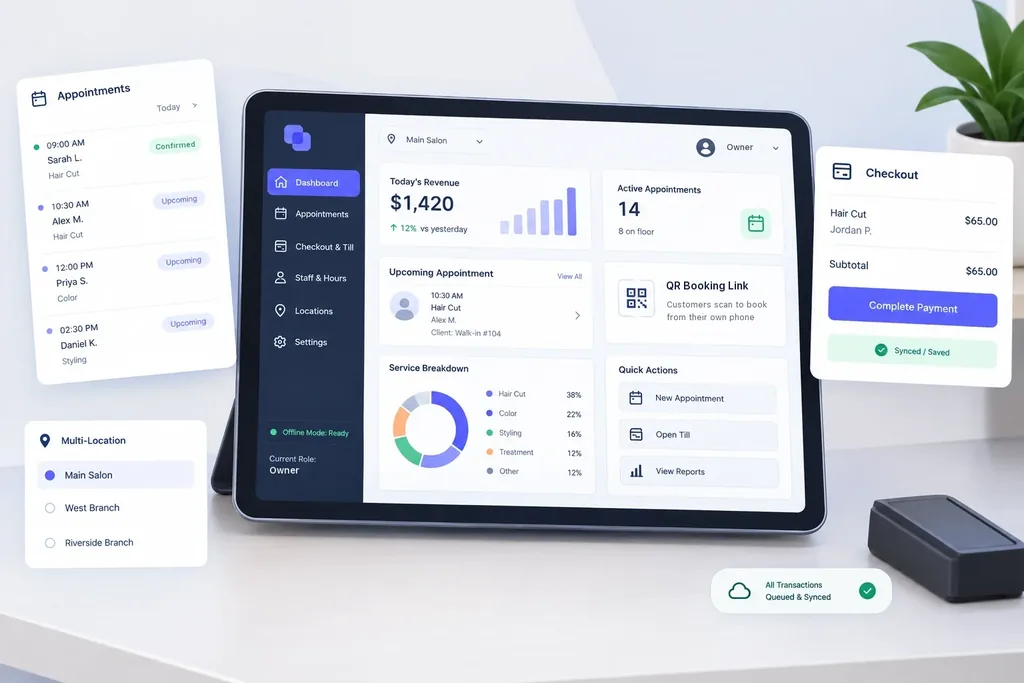
A salon POS that keeps working offline
A multi-location salon group needed appointments, checkout and reporting in one app. We built role-based workflows with permissions enforced in the data layer and local data handling for interrupted connections.
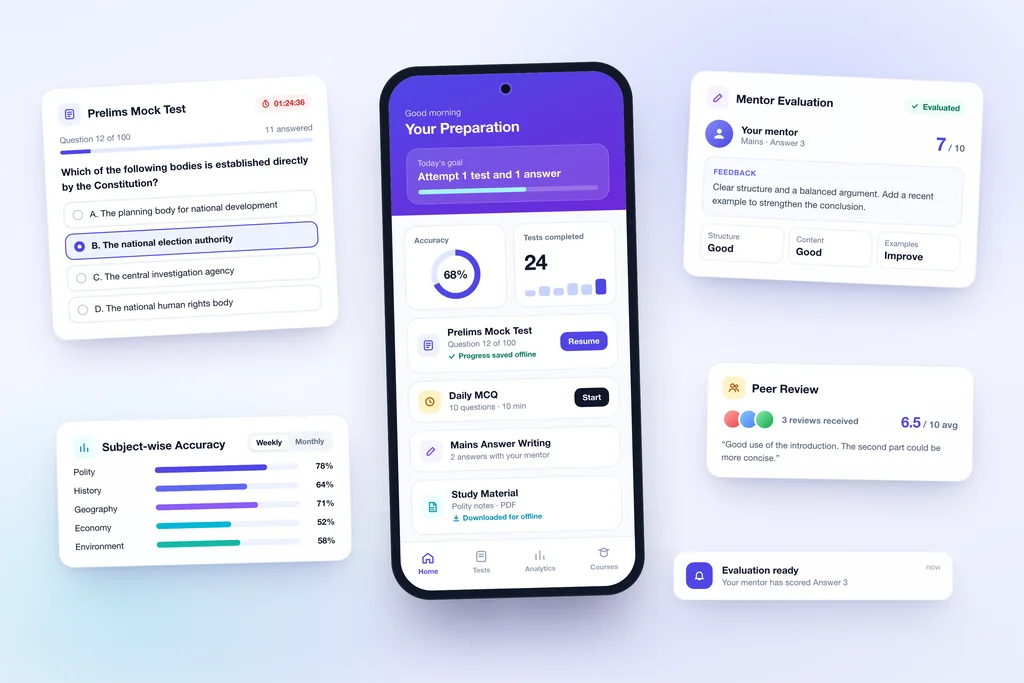
A coaching institute needed timed tests, mentor evaluation and paid courses. We built student, mentor and admin workflows with BLoC, Supabase and Hive to preserve test progress offline.
Users and workflows: what people need to accomplish, and which features belong in the first release.
Designs and platforms: existing Figma files, target devices and any web experience.
Technical dependencies: APIs, payments, offline requirements, hardware and existing code.
Release and support: launch goals, store accounts, handover and maintenance expectations.
Choose a fixed-scope project, dedicated engineering or a product team based on what you need. Compare ways to work with us.
Clear Answers
Flutter development FAQs
What is Flutter app development?
+
Flutter app development uses Google’s Flutter framework and the Dart language to build applications from a shared codebase. For our clients, the service covers product scoping, interface implementation, backend integration, testing and release for agreed iOS, Android and web targets.
Can the same Flutter app run on iOS, Android and web?
+
Yes. Flutter can share application logic and much of the interface across those platforms. Each target still needs appropriate layouts, supported integrations and testing. Native capabilities, browser restrictions and store requirements can add platform-specific work.
How much does Flutter app development cost?
+
We estimate after reviewing your core workflows, designs, platforms, integrations and release requirements. A focused MVP and a product with offline sync, payments or connected hardware have different scopes. Share your brief and we will outline deliverables, assumptions and an estimate. Hosting, paid APIs and store account costs should be budgeted separately.
How long does it take to build a Flutter app?
+
The timeline depends on feature scope, design readiness, backend availability and technical risk. We agree milestones after discovery and can prioritize a smaller first release. Store review and external approvals also affect launch timing; we do not promise a fixed timeline before reviewing the requirements.
Can you take over or upgrade an existing Flutter app?
+
Yes. We review the repository, dependencies, architecture, tests and release setup before proposing changes. Work can include Flutter upgrades, Riverpod or BLoC refactoring, performance improvements, bug fixes and new features. The review helps decide what to keep and what needs attention.
Can we migrate current native iOS and Android apps to Flutter without losing current users?
+
Yes. We can release the Flutter version as an update to your existing app, so users do not need a separate download or new account. We verify app identifiers and signing, then plan and test continuity for accounts, subscriptions and saved data. Any sign-in or device-support changes are identified before rollout.
Yes, when offline behavior is designed into the product. We define which data is stored locally, which actions can be queued and how changes reconcile when connectivity returns. Features that depend on a live server, such as confirming a payment, still need a connection.
Who owns the code and developer accounts?
+
You own 100% of the project source code and intellectual property. Our approach includes access to the repository, documentation and deliverables. Releases use your developer accounts, with a handover that explains how to build and maintain the application.
Do you help with App Store and Google Play submission?
+
Yes. We help prepare signed builds, release configuration and submission materials for the agreed platforms. You provide the developer accounts, business information and required policy content. Store approval is controlled by Apple and Google and cannot be guaranteed.
Can you work with our team after launch?
+
Yes. We can extend your product team with Flutter engineering, fix issues, update dependencies and build the next set of features. The engagement model, support coverage and priorities are agreed for your project rather than assumed to be included indefinitely.
Your Next Release Starts Here
Let’s shape your Flutter project.
Send us your idea, designs or existing app. We’ll help define the technical approach and the next useful step.